streetview: googlestreetview GSV photoessay photos streetview
by mattbucher

leave a comment






[sic] by Joshua Cody
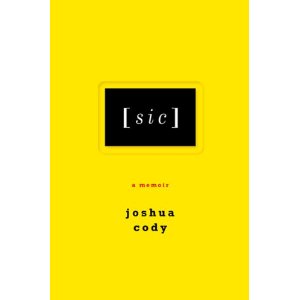
Joshua Cody’s new memoir [sic] is partly the story of how he—a young man living in New York City, a composer, a descendant of Buffalo Bill Cody—was diagnosed with cancer (a lymphoma of some sort, he never really says) and the treatment didn’t work and he had to get a bone marrow transplant, but really it’s mostly the story of what it’s like to be inside Joshua Cody’s head. One thing fiction (and memoir) teaches us, one of its greatest assets is that it’s possible (and good) to think beyond our selves—to actively try to adopt another’s point of view. David Foster Wallace says it way better than me: “I guess a big part of serious fiction’s purpose is to give the reader, who like all of us is sort of marooned in her own skull, to give her imaginative access to other selves.†And then in the same breath Wallace goes on to explain some of the same stuff about suffering that Joshua Cody is dealing with in [sic]:
Since an ineluctable part of being a human self is suffering, part of what we humans come to art for is an experience of suffering, necessarily a vicarious experience, more like a sort of “generalization†of suffering. Does this make sense? We all suffer alone in the real world; true empathy’s impossible. But if a piece of fiction can allow us imaginatively to identify with a character’s pain, we might then also more easily conceive of others identifying with our own. This is nourishing, redemptive; we become less alone inside. It might just be that simple.
But we’re getting a little ahead of our selves here. Both Wallace and Cody struggle with knowing something long and complex and looking at it, think “How do I tell this story? Where do you begin? How about this little bit here? Is that really the beginning? Bear with me while I go back and explain…†This struggle to deal with narrative and the flow of the story/plot reflects a lifelong struggle to live in a way that is not constantly fracturing and forking off in different directions. But that does not mean the story and the life are formless. Cody is a trained composer, a musician. He is deeply concerned about form and framing.
Cody is clearly a David Foster Wallace fan—and Wallace’s struggle with depression and eventual suicide haunt him. “Our greatest writer. As if I wasn’t thinking of him during that whole thing. My God. As if he hadn’t helped.” Cody contemplates killing himself (in a scene reminiscent of The Royal Tenenbaums), standing in front of a mirror, well actually “it was me between two mirrors, producing an infinite line of selves, like at the end of Citizen Kane.” And the crucial question he finds before him is: “How do we position suffering in human life?” And this is where it gets interesting, because maybe we think of a cancer memoir as one where the writer is faced with death and discovers the beauty of life or some such thing. But Cody, raised on aesthetics, says “I do love being alive, sitting here with this first edition of the Cantos my father gave me—and maybe, you may well argue, the house is too thick and the paintings a shade too oiled (and the old voice lifts itself, weaving an endless sentence), and you may well be right—but my goodness, fuck you, I happen to be so happy here with all these gifts and words and all these selves.” And if you yourself have been in this position of having a doctor refer to your imminent death and the chemotherapy you need to receive and if you have browsed the bookstore’s self-help-dying-cancer shelves and thought “pure dreck,” then Joshua Cody is right there with you:
If there are some people who require disease to teach them such things then fine, but I am not, was not one of those those, thank you very much. I loved life and found beauty and sources of pleasure in things on the outside and on the inside, and illness was not an opportunity for existential awakenings, it was the very opposite of beauty or grace, it was a harrowing, a descensus: and then it went down.
More than Wallace, this attitude (and the opening scene of receiving a chemotherapy treatment) call to mind, to me at least, Walter White and Breaking Bad. The nearness of death accentuates the urgency of life while also accentuating its inherent suffering, its opposition to neat and tidy endings. Both Cody and Walter White show us that the relatively commonplace occurrence of cancer can lead not only to introspection and carpe diem, but also to sad risk-taking and (personal and public) failures.

Wallace says “What the really great artists do is they’re entirely themselves. They’re entirely themselves, they’ve got their own vision, they have their own way of fracturing reality, and if it’s authentic and true, you will feel it in your nerve endings.†Joshua Cody is a great artist, entirely himself, and in [sic], while we watch him flay his own nerve endings and try to mend them back together again, we see glimpses of our selves.










streetview: google googlestreetview GSV personal photos streetview
by mattbucher
1 comment





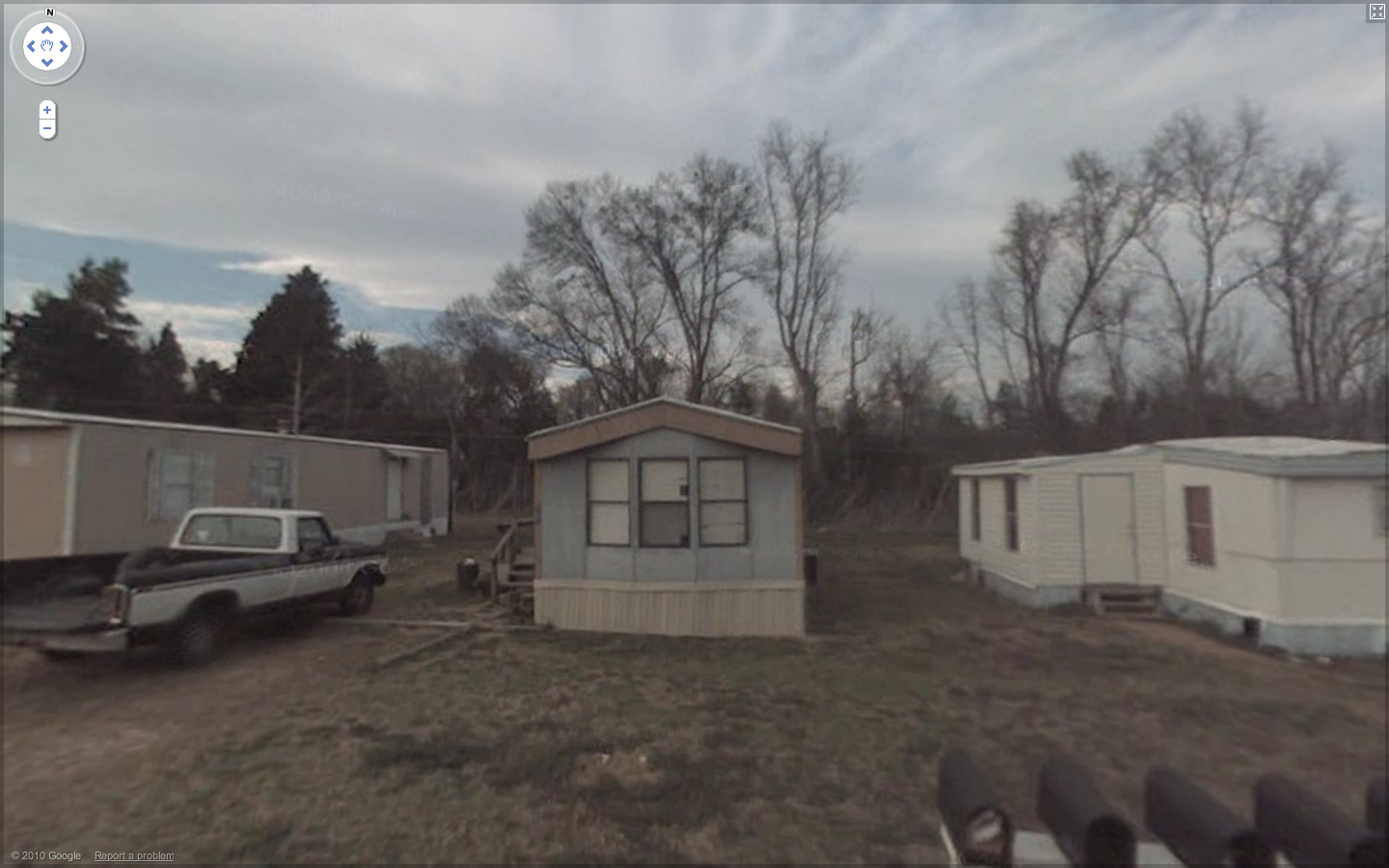


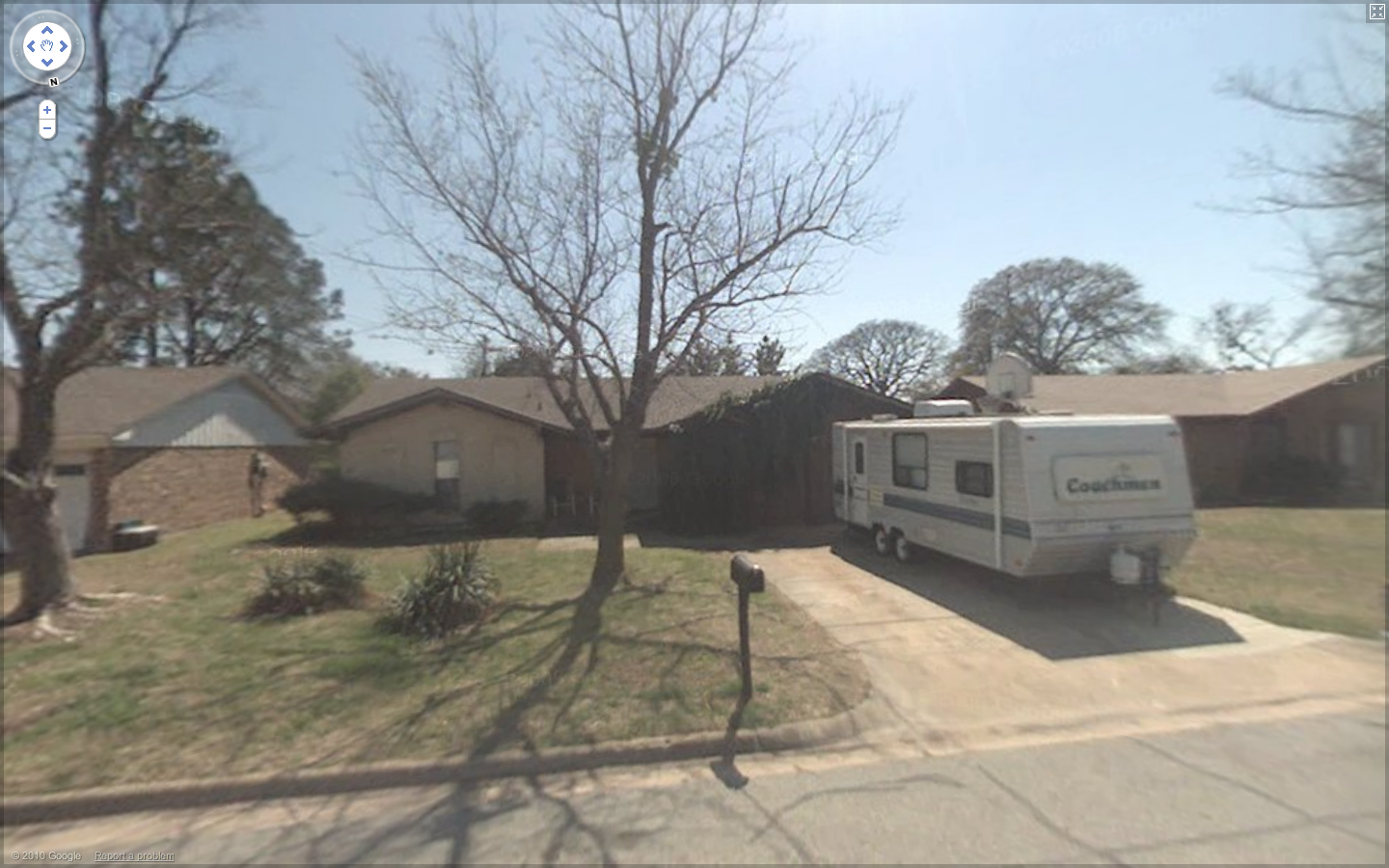


Shattercane & Lamb’s Quarter
I’ve written here about how I’m interested in dating the various sections of The Pale King–when they were written, what else DFW might have been working on concurrently, and how the other might have influenced The Pale King (or how The Pale King might have influenced what else he was working on at the time). I think some of that might be discernible from some of the small details that show up in other works (more on this), but of course we’re likely to know more when The Pale King materials make their way from Little, Brown down to the Ransom Center. The HRC tells me that the Pale King materials will arrive in Austin after the paperback is released. Typically the paperback comes out a year after the hardcover (so maybe April 2012), but perhaps Little, Brown will release the paperback in time for Christmas? Either way, I doubt the Pale King materials will be indexed and accessible to researches before Fall 2012.
In any case, there might not be any meaningful connection that shows Wallace was working on more than one thing at once, but just that, like most writers (and professors), he had a lot of things that continued to interest him, and in many cases he retold the same things multiple times. Some of the same motifs show up in all his work and many of the same details get recycled and slightly retold.
I mentioned in the recent contest here that I was surprised no one chose any of the words from The Pale King‘s opening section as the “best” word.
I was a little surprised that no one submitted any of the words from the opening page of the novel: shattercane, sawbrier, muscadine, vetch, invaginate, chert, corn-bound.
Honestly, I didn’t think much of this passage when it appeared in Tri-Quarterly under the title “Peoria (4).” And I thought it was a curious choice for Michael Pietsch to use as the opening of this particular novel. But lately, I’ve begun to wonder what inspired Wallace to write it in the first place. Is it just a paean to his “home” state of Illinois? Was he trying to do his best Cormac McCarthy impersonation? Did he really intend to use this passage in TPK or had he written it for some other purpose? Am I overthinking this?
And then the other day I was listening to the audiobook of Brief Interviews with Hideous Men, read by The Man Himself (get it here: http://www.sonn-d-robots.com/dfw/readings/), specifically, I was listening to the long (55 minutes), closing chapter of the book: BI #20, The Granola Cruncher. Toward the end of the story, when the girl is driven to a remote location and is forced out of the car by the predator, and then forced to lay in the grass, face down, this passage suddenly sounded terribly familiar to me:
Lying there helpless and connected, she says her senses had take on the nearly unbearable acuity we associate with drugs or extreme meditative states. She could distinguish lilac and shattercane’s scents from phlox and lamb’s quarter, the watery mint of first-growth clover.
Past the flannel plains and blacktop graphs and skylines of canted rust, and past the tobacco-brown river overhung with weeping trees and coins of sunlight through them on the water downriver, to the place beyond the windbreak, where untilled fields simmer shrilly in the a.m. heat: shattercane, lamb‘s quarter, cutgrass, sawbrier, nutgrass, jimsonweed, wild mint, dandelion, foxtail, muscadine, spinecabbage, goldenrod, creeping charlie, butter-print, nightshade, ragweed, wild oat, vetch, butcher grass, invaginate volunteer beans, all heads gently nodding in a morning breeze like a mother’s soft hand on your cheek.


I displayed far more affect than she did. She learned more about love that day with the sex offender than at any other stage in her spiritual journey, she said. Let’s both have one last one and then that will be it. That her whole life had indeed led inexorably to that moment when the car stopped and she got in, that it was indeed a kind of a death, but not at all in the way she had feared as they entered the secluded area. That was the only commentary she indulged in, just at the anecdote’s end. I did not care whether it was quote true. It would depend what you mean by true. I simply didn’t care. I was moved, changed—believe what you will. My mind seemed to be moving at the quote speed of light. I was so sad. And that whether or not what she believed happened happened, it seemed true even if it wasn’t. That even if the whole focused-soul-connection theology, that even if it was just catachretic New Age goo, her belief in it had saved her life, so whether or not it’s goo becomes irrelevant, no? Can you see why this, realizing this, would make you feel conflicted in realizing that your entire sexuality and sexual history had less genuine connection or feeling than I felt simply lying there listening to her talk about lying there realizing how lucky she’d been that some angel had visited her in psychotic guise and shown her what she’d spent her whole life praying was true? You believe I’m contradicting myself. But can you imagine how any of it felt? Seeing her sandals across the room on the floor and remembering what I’d thought of them only hours before? I kept saying her name and she would ask What? and I’d say her name again. I’m not afraid of how this sounds to you. I’m not embarrassed now. But if you could understand, can you see why there’s no way I could let her just go away after this? Why I felt this apical sadness and fear of the thought of her getting her bag and sandals and New Age blanket and leaving and laughing when I clutched her hem and begged her not to leave and said I loved her and closing the door gently and going off barefoot down the hall and my never seeing her again? Why it didn’t matter whether she was fluffy or not terribly bright? Nothing else mattered. She had all my attention. I’d fallen in love with her. I believed she could save me. I know how this sounds, trust me. I know your type and I know what you’re bound to ask. Ask it now. I felt she could save me I said. Ask me now. Say it. I stand here naked before you. Judge me, you chilly cunt. You dyke, you bitch, cooze, slut, gash, cunt. Happy now? All judgments confirmed? Be happy. I do not care. I knew she could. I knew I loved her. End of story.
Pale King Contest Winners
I’ve received a ton of great submissions for the Pale King contest I announced a couple of weeks ago. I want to thank everyone who submitted entries and put thought and energy into these ideas. I was really impressed by the quality of the answers. Many of the responses to the contest about themes and ideas were lengthy and sophisticated. I truly enjoyed reading all of them. I hope you enjoy them as well.
(Winners will receive copies of David Lipsky’s Although of Course You End Up Becoming Yourself, courtesy of Random House, copies of David Hering’s Consider David Foster Wallace, courtesy of SSMG Press, Infinite Jest posters from the amazing Sam Potts and other small prizes.)
Contest #1: Did any theme or idea in The Pale King remind you of Wallace’s earlier work?
Winner:
Matt King
The Pale King, approximately p. 270-284 vs. Infinite Jest, approximately pg. 601-619.
“The connection I have in mind concerns Wallace’s use of needlessly complicated and poorly planned (or deliberately planned to be inconvenient) parking situations and bureaucratic demands placed on specific individuals as a means of gaining insight into these characters. In the relevant section of The Pale King, David “Author Here” Wallace has to balance the (past) anxiety of his new job and the (current) demands of narration against the poorly planned parking situation at the Peoria REC. In the relevant section of Infinite Jest, Don Gately has to balance the rules of the halfway house and the consequences of Lenz’s shenanigans while also trying to make sure that the residents get their cars moved to the other side of the street. For Wallace, there seems to be a sense in which both submitting oneself to bureaucratic rules (of the halfway house, of the IRS) and enduring situations made needlessly complicated (in these cases, specifically with reference to parking) makes one stronger, or at least serves as a sort of test of Don’s and Dave’s abilities to let go of a sense of self. In other words, these scenes are about Don’s and Dave’s capacity to respond, not only to other people but to situations that test their patience and limits of boredom and annoyance.”
Runners Up:
James McAdams: “I noticed a direct accounting link between Sylvanshine’s observation that ‘the core accounting equation A=L+E can be dissolved into everything from E=A-L to beyond’ (The Pale King, p. 5) and one of the super long footnotes that rupture “Octet,” i.e. where the narrating author admits that ‘the Quiz spends five lines constructing a possible analogy between the world’s joy/misery ratio and the seminal double-entry A=L+E equation of modern accountancy, as if more than one person out of a thousand could possibly give a shit.’ (Brief Interviews, 150).”
Matthew Ritter: “Meredith Rand has a history of grappling with the classic objective/subject (or being-for-itself vs. being-for-others if you want to get existential) distinction. On page 484, she says, “I mean starting to see yourself as a piece of meat, that the only thing you’ve got is your looks and the way you affect boys, guys. You start doing it without even knowing your doing it. And it’s scary, because at the same time it also feels like a box; you know there’s more to you inside you because you can feel it, but nobody will ever know–not even other girls, who either hate you or are scared of you, because you’re a monopsony […]”
Several folks submitted this one: toward the end of Meredith Rand’s long monologue, she talks about “all the terrible country songs my dad used to listen to” and how if you change “the you to me, like, you understand that what they’re really singing about is losing some part of themself or betraying themself over and over for what they they think other people want.” (TPK, page 508). Wallace talks about this same phenomenon to David Lipsky in Although of Course You End Up Becoming Yourself, page 198: “I remember just being real impatient with it [country music]. Until I’d been living here about a year. And all of a sudden I realized that, what if you just imagined that this absent lover they’re singing to is just a metaphor? And what they’re really singing to is themselves, or to God, you know?”
The Menace of Insects – Glendennings obsession with mosquitoes as it relates to fear of insects (spiders) in Infinite Jest and “Philosophy and the Mirror of Nature.”
Contest #2: What is the single best word in The Pale King?
Winner: banausic, page 229, submitted by Jesse Hilson
“Banausic” is defined as serving utilitarian purposes only or mechanical or practical. The word and concept (banausos) have an impressively complex etymology related to Greek mythology, economic insults, Plato, and philistinism. So much of The Pale King concerns the class of people who appear to actively choose to serve utilitarian purposes only—the practical, mechanical, routine tasks necessary that keep the nation’s finances flowing.
Runners Up:
Other words submitted:
titty-pincher
Q-tipless
[I was a little surprised that no one submitted any of the words from the opening page of the novel: shattercane, sawbrier, muscadine, vetch, invaginate, chert, corn-bound. Read these.]
Congratulations again to all the winners. I will contact you about the prizes.